Have you ever stood in a cheese shop wondering which cheese board ingredients to include in your spread? With cheese boards growing heavily in popularity on social media over the last couple of years, hosts have begun to feel an immense amount of pressure over curating their cheeseboard offerings. We reached out to our two Head Chefs from the Royal Cliff Hotels Group – Chef Peter Held and Chef Nick Vonk – to get a culinary professional’s knowledge on how to build a cheese board that works for everyone at the table. Whether it’s a casual get-together or an elegant dinner party, read on to discover practical trips and advice on how to assemble a cheeseboard fit for a luxury 5-star hotel.
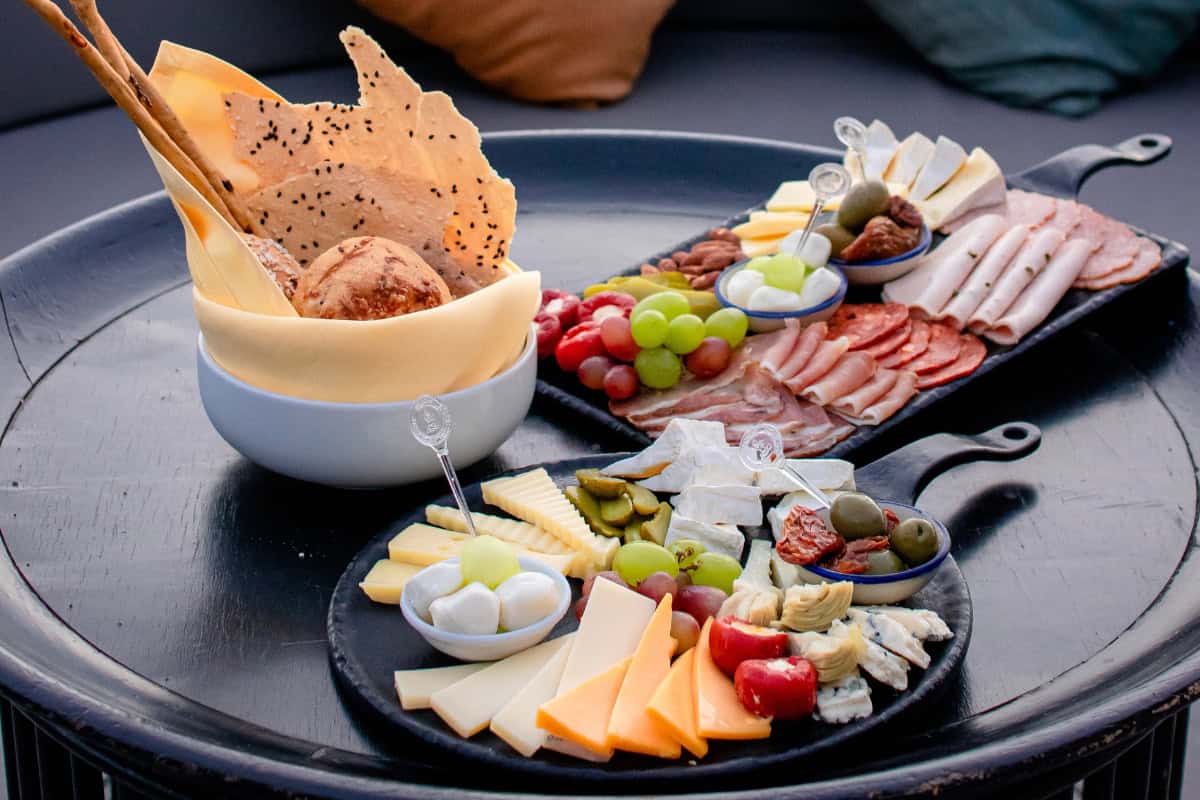
How Many Cheeses Minimum Should Be on a Cheese Board?
In order to call it a cheese platter, at least 5 different types of cheese from different categories must be present on the spread according to Chef Peter Held. Chef Nick Vonk adds that, “5 cheeses should be the perfect amount as it would cover each category of cheese without overwhelming the palate.” He then provides categories of cheeses you should include and some examples.
| Type of Cheese | Reasoning | Examples |
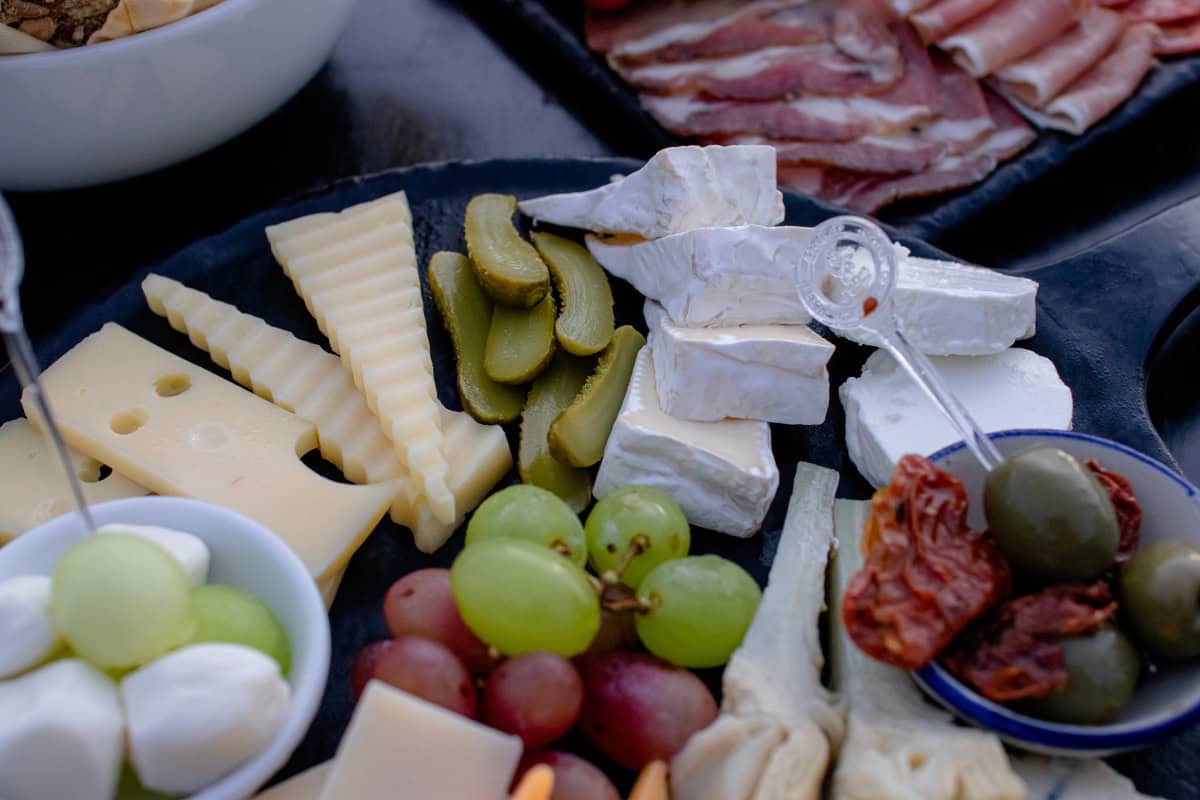
| Soft White Mould Cheese | Creaminess and comfort | Brie (France) Camembert (France) Chaource (France) Neufchatel (France) Coulommiers (France |
| Semi-Hard Pressed Cheese | Balance and versatility | Cheddar (English) Gouda (Netherlands) Havarti (Denmark) Manchego (Spain) Gruyère (France) |
| Hard Pressed Cheese | Depth and umami richness | Parmigiano-Reggiano (Italy) Pecorino Romano (Italy) Aged Cheddar (England) Manchego (Spain) Comté (France) |
| Soft Washed Rind Cheese | Bold and aromatic | French Époisses (France) Taleggio (Italy) Pont l’Évêque (France) Reblochon (France) Langres (France) |
| Blue Cheese | Power and contrast | Roquefort (France) Stilton (England) Gorgonzola (Italy) Cabrales (Spain) Danish Blue (Denmark) |
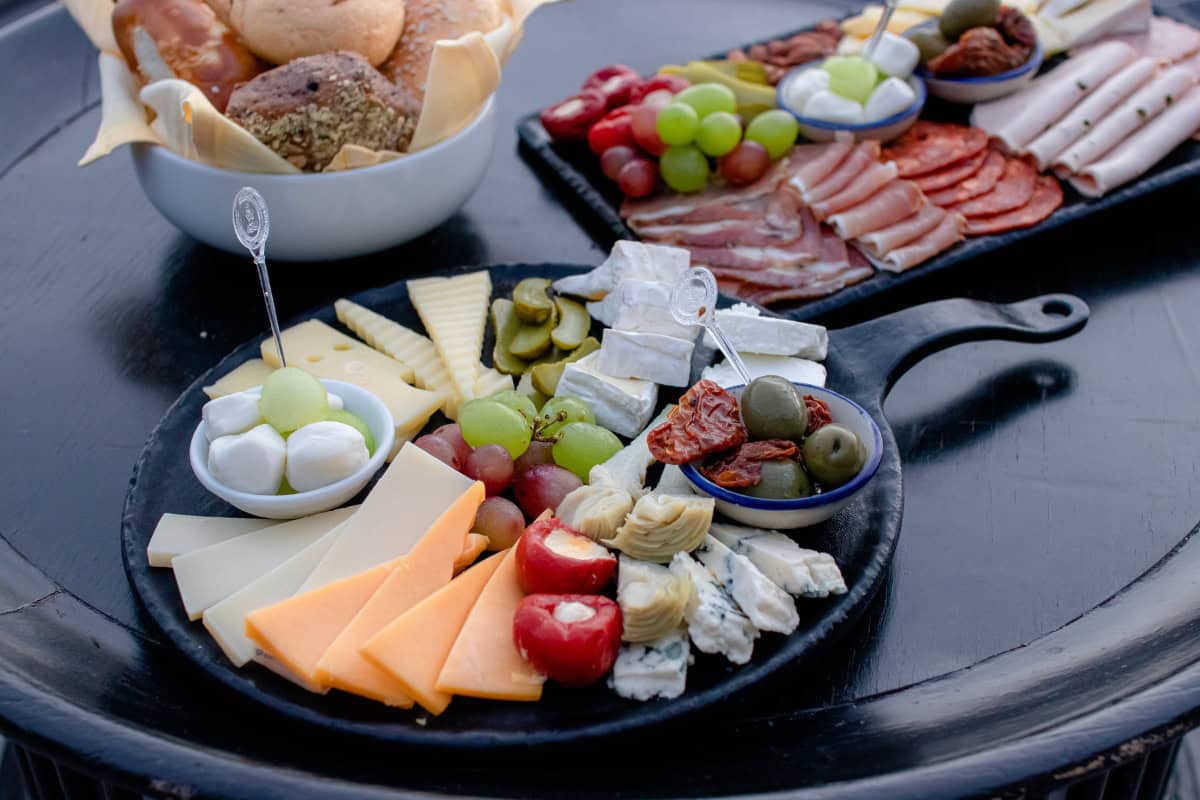
Tips on Assembling Cheese Boards from Head Chefs at a Luxury Hotel
Chef Peter Held:
“My advice: First, gather as much information as possible about your guests’ preferences. Not everyone likes strongly aromatic cheeses, and for most Asians, cheese consumption is limited to pizza toppings or the new cheese sauces at some fast-food chains. These dishes are prepared with very mild cheeses that have hardly any pronounced cheesy flavor. Cheese can be like durian: It can smell very strong but taste fantastic. Some people like it, others don’t. So, it’s best to ask your guests about their preferences first before procuring your cheese board ingredients.”
Chef Nick Vonk:
“Gather all the information about the cheeses first so you are able to recommend the right type of cheese to the guest’s preference. Every person has a different opinion on cheese. Some cheeses have a strong flavor profile, others are mild. As well the smell can be strong or mild.”
Ask Our Experts: Insights into the Culinary World
You curate cheese boards for discerning international guests daily. What are the categories of cheese you always include, and what does each bring to the experience?
Chef Peter Held:
“Your cheese board ingredients should include a soft cheese like Brie, a blue cheese like Gorgonzola, a semi-hard cheese like Maasdam, a hard cheese like Manchego or Gruyère, and a washed-rind cheese like Munster or Taleggio. Each cheese and each category has its own distinct character.”
Some cheese boards that look crowded and others that look sparse. What’s the visual balance you aim for, and how do you achieve it?
Chef Nick Vonk:
“For the visual balance, the cheeses should be the basis and placed in the correct order of category. If wrong, it might overpower the palate. The accompanying condiments and garnishes should be placed around asymmetrically to not make it look too static. Using different colors of garnishes and cutting items in different shapes will also give a better visual balance.”
What’s one cheese you always include because guests unfailingly love it, and one you include specifically to challenge their palates?
Chef Peter Held:
“Brie is always a safe choice, as its soft texture and mild flavor appeal even to cheese novices. Washed-rind cheeses often present a particular challenge or a strong blue cheese.”
Chef Nick Vonk:
“Epoisses de Bourgogne. It is one of my favorite cheeses. It has a bold, creamy, and deeply umami flavor. It’s tangy and slightly salty, with nutty and earthy undertones that develop as it matures. The creamy interior melts on the palate, delivering a buttery richness.”
What’s the most common mistake you see when people assemble cheese boards, even in upscale settings?
Chef Peter Held:
“The lack of accompaniments such as truffle honey or fig jam, which go perfectly with certain cheeses.”
Chef Nick Vonk:
“Putting cheeses in the wrong order. For example, if you eat the blue cheese first, it will overpower your palate and you wouldn’t be able to fully taste and experience the other cheeses because of the strong flavor profile of the blue cheese. It should be from mild to strong.”
If you’re interested in enjoying thoughtfully curated cheese spreads or learning more about cheese board ingredients from experienced chefs at a 5-star hotel, reserve a stay with us by clicking here or sending us an email at relax@royalcliff.com. You can also get in touch with us at 038 250 421 or chat with us directly via LINE (@royalcliff) or WhatsApp (+66842289596) to secure your booking.